

Planning a trip to India’s colorful cities, sacred temples, and diverse landscapes is exciting. After booking your flights and accommodation, the next important step is to arrange your entry visa. For most travelers, the India Electronic Visa (India eVisa or ETA) is the quickest and simplest option.
One common question travelers ask is: How far in advance can you apply for an India eVisa?
This guide covers everything you need to know so you can apply on time and enter India without issues.
1. The Golden Rule: India eVisa Entry Date Rules
First Entry Requirement (Very Important)
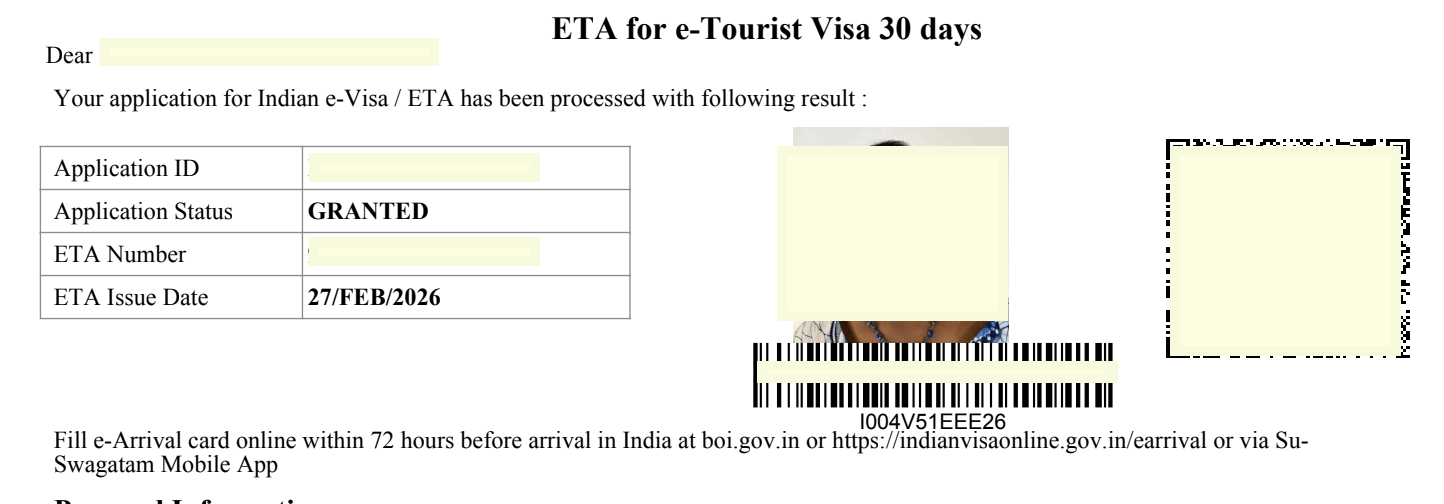
When applying for an India eVisa, your first entry into India must be after the ETA is issued.
-
You cannot enter India before your ETA issuance date
-
Your travel date must fall within the validity period
How Far in Advance Can You Apply?
For 30-Day India eVisa (Double Entry)
-
Earliest application: 120 days before your intended travel date
-
Latest application: 4 days before departure
This means you should not apply too early if your travel date is far away, as the short validity could expire before use.
For 1-Year and 5-Year India eVisa
-
Application window: 120 days to 4 days before travel
-
Visa validity: Up to 5 years from ETA issuance date
Pro tip: Always plan your application so your ETA remains valid for your intended entry date.
2. Minimum Time: India eVisa Processing Time
Applying too late is the most common and risky mistake.
Standard Processing Time
-
Typically 3–5 working days
-
Excludes weekends and Indian public holidays
Why You Should Build in a Buffer
-
High application volumes
-
Data or photo errors
-
Holiday backlogs
-
Manual verification by Indian Immigration
Best practice: Apply at least 7–10 days before departure, even though the minimum requirement is 4 days.
3. Key India eVisa Requirements That Affect Approval Speed
A smooth timeline depends on submitting error-free documents.
Essential Checklist
-
Passport validity: Minimum 6 months from arrival date
-
Passport bio-data page scan: Clear, uncropped
-
Portrait photo: White background, front-facing, no glasses
-
Accurate travel details: Entry date must match your plan
Common causes of delay or rejection:
-
Blurry or shadowed photos
-
Incorrect passport number
-
Applying while an old India visa is still valid
Important Note on Existing Visas
Indian Immigration may refuse to issue a new eVisa if your current India visa is still valid and usable for entry.
In such cases, travelers are expected to use the existing valid visa instead of applying for a new one.
In Conclusion
The India eVisa system gives travelers a quick and easy way to enter one of the world’s most interesting destinations, but timing matters.
By understanding:
-
The updated entry date rules
-
The correct application window
-
The importance of ETA issuance dates, you can avoid last-minute panic, rejections, or unusable visas.
you can avoid last-minute panic, rejections, or unusable visas.
Plan ahead, apply at the right time, and you’ll be set to experience India with confidence and peace of mind.